How Digital Gaming Ecosystems Reflect Broader Trends in Online Consumer Spending
McKinsey & Company has reported that digital consumer behavior increasingly centers around convenience, personalization, and frictionless transactions across online platforms. Spending patterns that once belonged mainly to e-commerce now appear across entertainment platforms, digital communities, and gaming ecosystems as consumer habits continue evolving.
People increasingly interact with digital environments where purchases involve virtual products, subscriptions, premium access features, and digital assets. Research and platform analysis tools such as the Registration guide (daftar guide) also document how users navigate digital participation systems and account onboarding behavior. These observations reveal that online gaming environments increasingly mirror wider patterns in digital consumption rather than operating as isolated entertainment spaces.
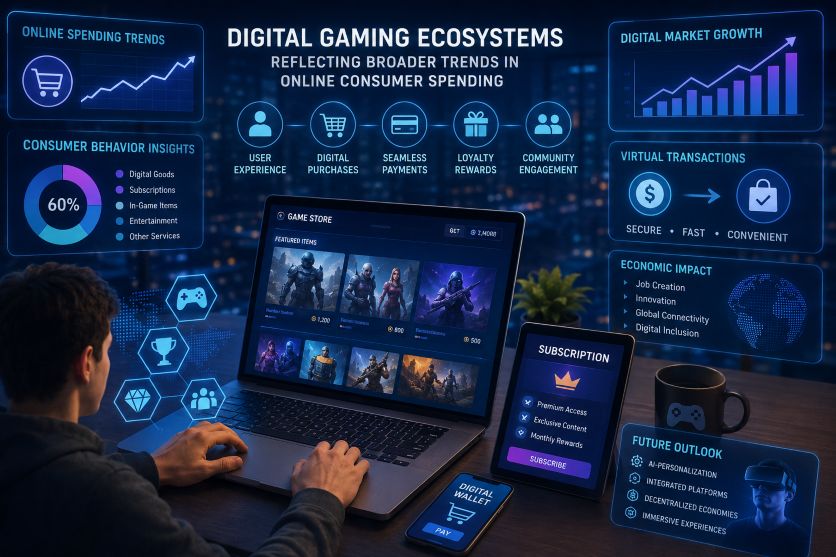
The Challenge of Understanding Modern Online Spending
Online spending has changed significantly over the last decade. Earlier forms of digital purchasing focused primarily on physical goods ordered through websites. Today, digital spending extends far beyond traditional retail transactions. Consumers regularly purchase access, convenience, digital items, memberships, and interactive experiences.
This shift creates a challenge for economists and researchers. Traditional spending categories become harder to separate because modern consumer behavior often overlaps across multiple environments. A user might subscribe to streaming services, purchase virtual items, pay for mobile applications, and participate in gaming-related ecosystems within the same week.
Statista has shown that global digital spending continues expanding across entertainment and online services. Much of this growth reflects changing expectations around accessibility and immediate interaction rather than purely material ownership.
Understanding these behaviors requires looking beyond individual platforms and examining broader economic patterns.
How Gaming Ecosystems Mirror Consumer Habits
Gaming environments provide useful examples because they combine several forms of digital spending into a single ecosystem.
Players may purchase cosmetic items, account enhancements, digital inventories, or optional services. While these actions exist within gaming communities, the behavior itself resembles patterns found elsewhere in the digital economy.
For example, many online platforms simplify transactions by reducing friction during purchasing steps. Subscription platforms, retail marketplaces, and gaming systems frequently use similar design principles:
- Personalized recommendations
- Streamlined payment systems
- Reward structures
- Account-based ecosystems
- Persistent digital identities
These features create familiarity for users. As consumers move between different online services, consistent experiences often reduce barriers during decision-making.
Economists sometimes describe this as ecosystem integration, where spending decisions become connected to broader digital habits rather than isolated purchases.
Behavioral Signals Inside Digital Communities
Consumer spending rarely involves price alone. Emotional value, community participation, and perceived usefulness also influence decisions.
Deloitte Digital Media Trends research indicates that consumers increasingly prioritize experiences that support engagement and social connection. Gaming communities often demonstrate this behavior clearly because users assign value to items or services based on status, personalization, or identity expression.
Digital consumers sometimes treat virtual products similarly to physical products. Limited digital items, exclusive access opportunities, and personalized inventories can create perceived value despite lacking physical form.
This behavior does not necessarily represent irrational spending. Instead, it reflects how value itself has changed within online environments.
Documentation systems and onboarding resources sometimes act as informational references helping users understand participation structures, similar to how a platform setup resource or account enrollment reference supports navigation within larger ecosystems.
The economic observation here is important. Consumers increasingly evaluate utility through experience and access rather than ownership alone.
Economic Observations Emerging From Gaming Systems
Several wider economic themes become visible when examining digital gaming environments.
Subscription Thinking
People increasingly become accustomed to recurring access models rather than one-time ownership. Streaming services and software platforms have normalized this behavior, and gaming ecosystems often reflect similar patterns.
Micro-Transactions and Small Spending Decisions
Large purchases are no longer the only indicator of consumer activity. Small, repeated transactions can collectively represent significant spending behavior.
PwC Global Entertainment and Media Outlook has observed that digital industries increasingly depend on multiple small interactions rather than single high-value purchases. Similar observations can also be seen in discussions surrounding economic conditions and betting behavior, where broader financial pressures, consumer confidence, and spending habits influence how individuals engage with digital environments. These small decisions also generate large amounts of behavioral data that organizations use to understand broader consumer preferences.
These small decisions also generate large amounts of behavioral data that organizations use to understand broader consumer preferences.
Digital Identity as Economic Value
People increasingly build online identities across platforms. Profiles, avatars, histories, preferences, and digital inventories can influence engagement patterns.
As a result, digital participation itself sometimes functions as an economic activity.
Future Patterns Across Digital Spending Environments
Future trends suggest stronger connections between gaming ecosystems and wider online economies. Artificial intelligence, personalized experiences, and integrated payment technologies may continue shaping how users interact with digital platforms.
World Economic Forum discussions on digital economies increasingly emphasize how virtual environments contribute to broader economic systems rather than existing separately from them.
Consumers may continue expecting seamless movement between platforms where purchases, identities, and experiences become interconnected.
Researchers also expect more attention toward transparency, privacy concerns, and responsible engagement practices as digital systems evolve.
Balancing Innovation With Responsible Participation
While digital ecosystems continue expanding, spending behavior still carries financial considerations. Faster transactions and highly connected systems can sometimes make spending decisions feel less noticeable over time.
Individuals participating in gambling-related environments or similar digital systems should remain aware of personal spending habits and financial limits. Responsible participation involves understanding risks and recognizing that entertainment activities can involve monetary consequences.
The broader lesson extends beyond gaming alone. Digital ecosystems increasingly act as reflections of changing consumer behavior across society. Patterns once associated with niche communities now resemble wider economic movements involving convenience, personalization, and connected experiences. Understanding these shifts, together with guidance resources and account setup references, may help observers better interpret how online spending behavior continues changing in the years ahead.